

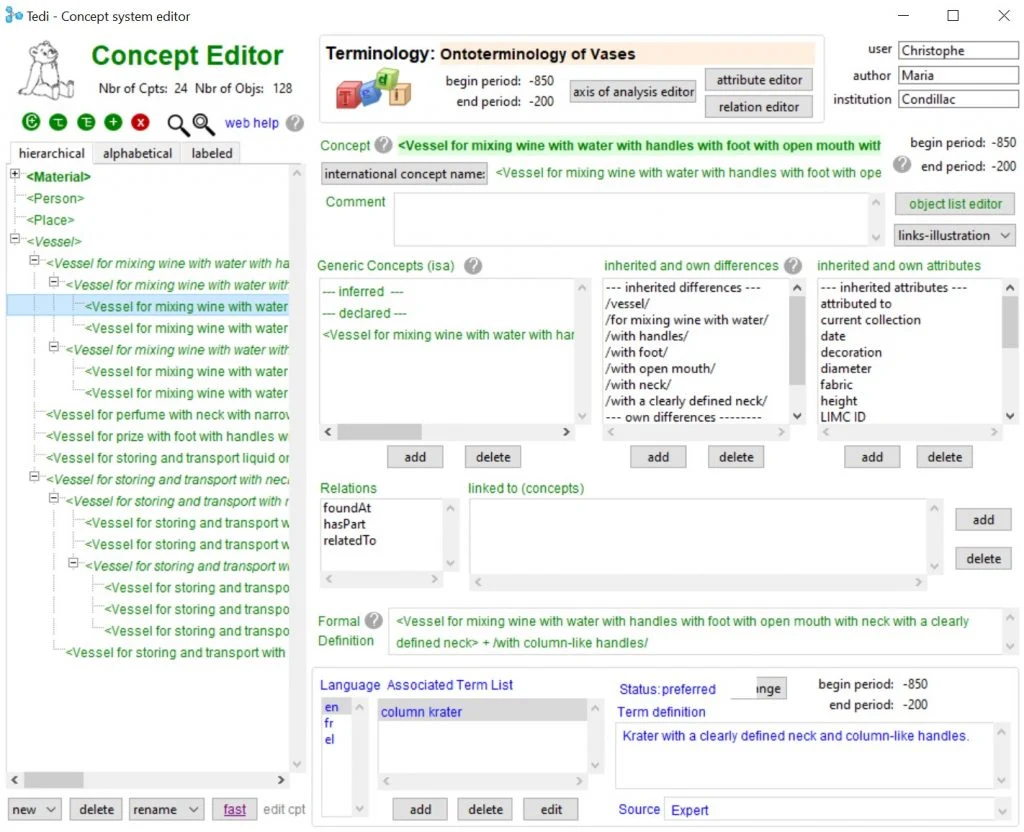
Desktop application
Ontoterminology Editor
Build a formal system of concepts. Connect it to independent term lists in multiple languages.
Research software
Build, inspect, analyse and query. Seven tools connect texts and concepts with structured research data.
Desktop application
Build a formal system of concepts. Connect it to independent term lists in multiple languages.

Web application
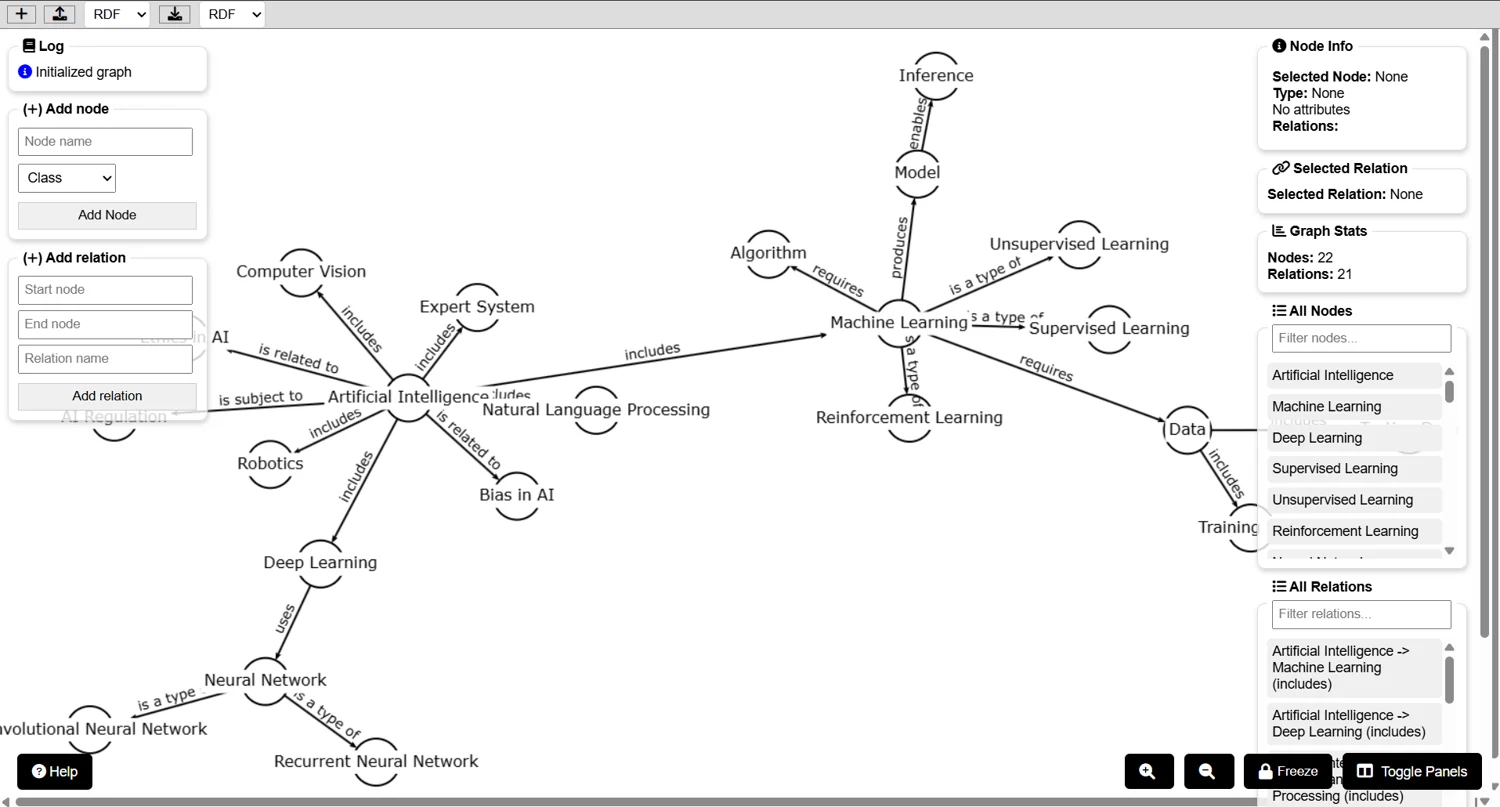
Read an ontoterminology as a tree. Explore concepts, reveal their instances and share a standalone view.
Web application
Draw a knowledge graph. Add classes, individuals, multilingual attributes and labelled relationships.
Web application
Upload an RDF file. Select the relationships that matter and explore the graph behind them.
Desktop application
Run the Python edition locally. Inspect metadata, choose properties and query your RDF file.
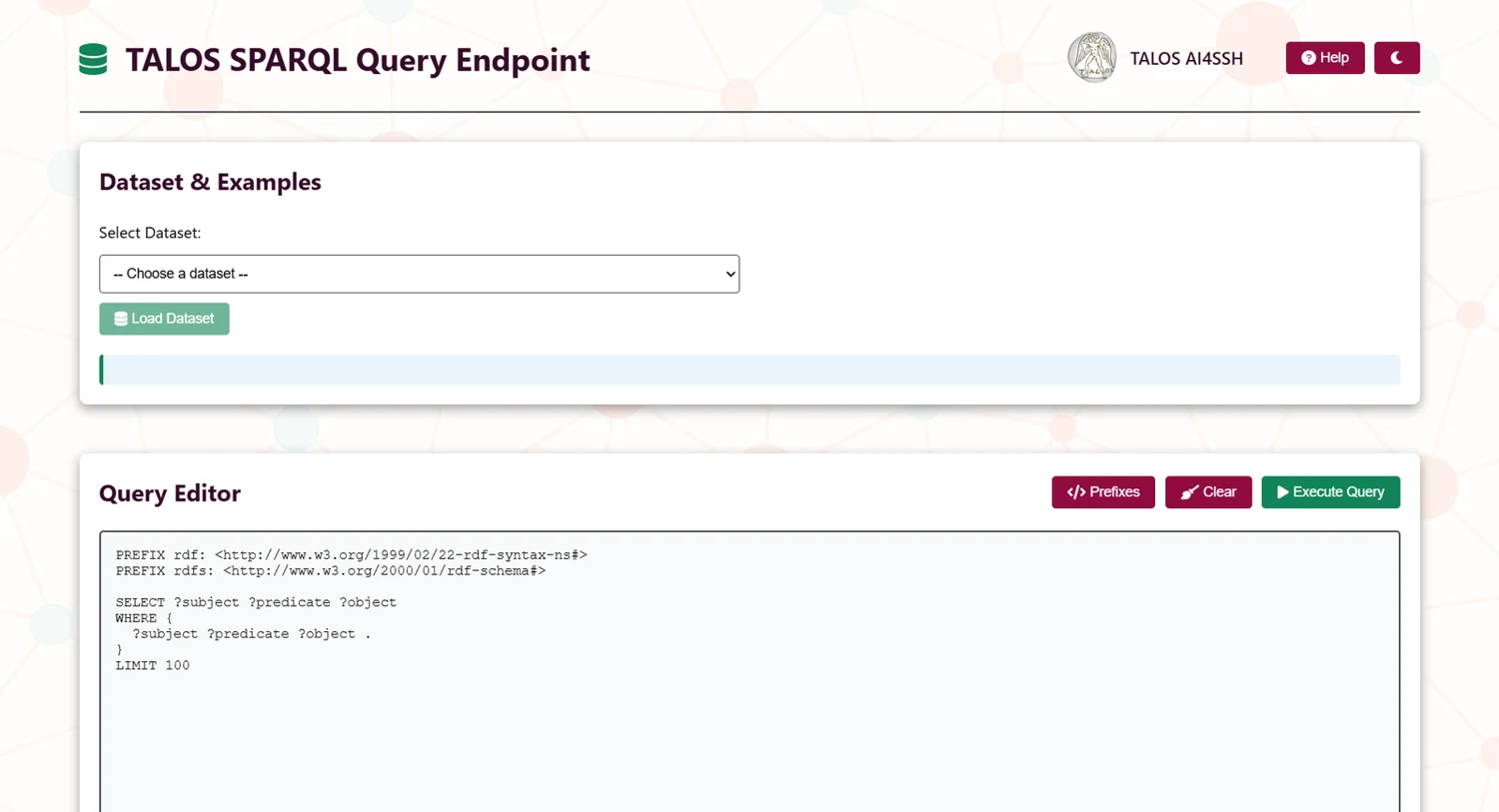
Web application
Ask reproducible questions of the laboratory’s published knowledge graphs. Inspect results and export them for analysis.
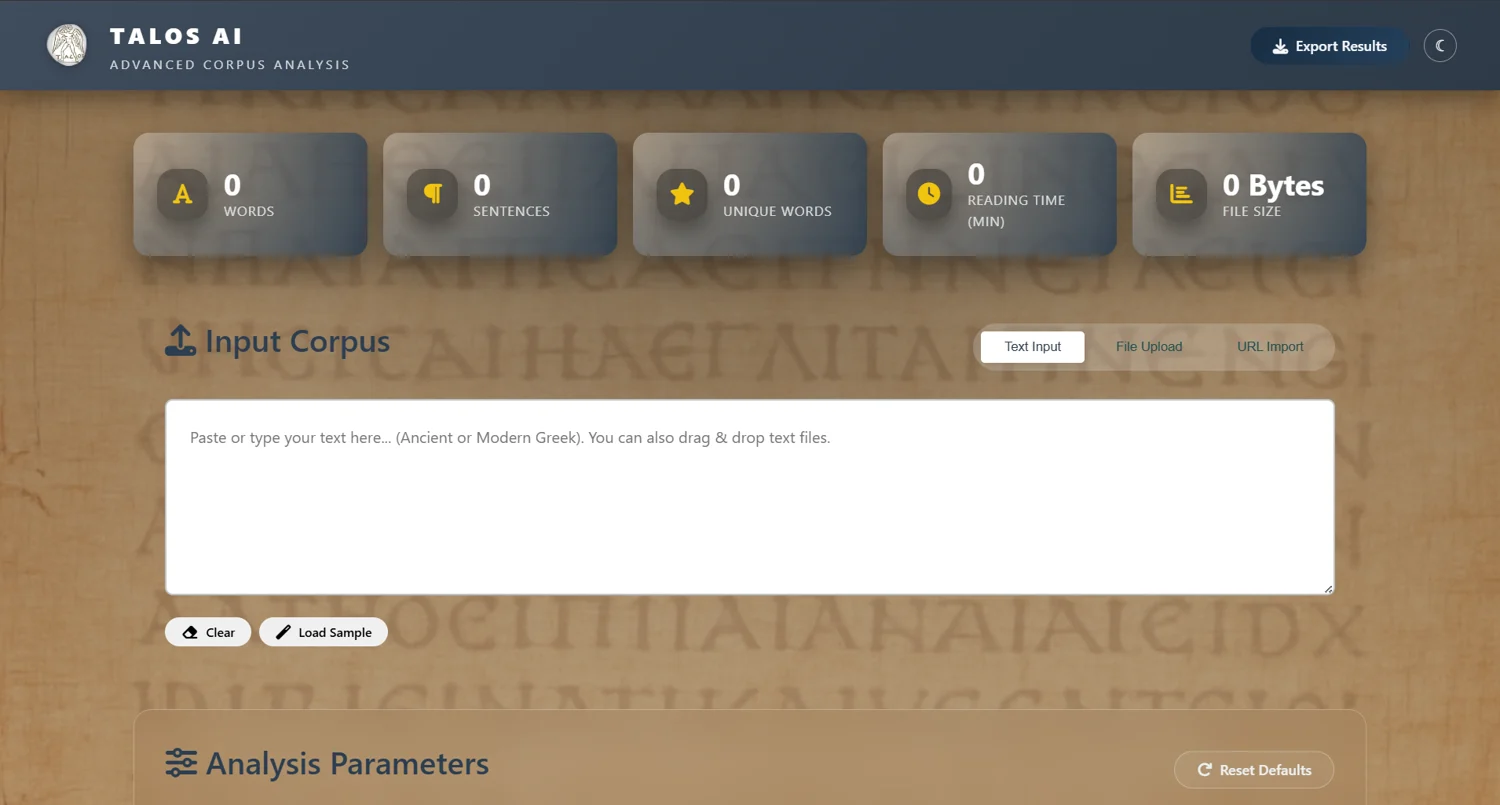
Web application
Explore Greek corpora through frequencies, collocations and networks, with model-assisted linguistic analysis.
Define concepts and terms, or draw a graph directly.
Read the hierarchy or examine a network of selected relationships.
Explore corpus patterns and review candidate entities or terms.
Ask questions of the published graphs.
These are complementary routes, not an automatic pipeline. Verify formats and licences when moving between tools.
Each dataset page explains its scope, access routes, graph IRI and citation. Tool licences and dataset licences are separate.
TEDI has a personal academic licence. The other supplied tool pages specify PolyForm Noncommercial 1.0.0. Follow the licence included with the version you use and cite each tool separately.
Report reproducible bugs in the relevant public repository, or contact TALOS with the tool name, version, steps and error message.
TALOS Laboratory
Start typing to search the content of this page.