Supervised research experience for undergraduate and postgraduate students in humanities, education, computing and related fields.
Published terms · spring 2025
The archived scheme ran for 13 weeks (10 February–23 May 2025), without remuneration, with workspace at UCRC and a completion certificate. ECTS depend on the student’s degree programme; they are not automatic.
Confirm dates, supervision and credit recognition before arranging a new placement. The DH diploma placement is a separate 5-ECTS course.
Prepare your proposal
Describe your motivation, background, research topic, objectives, datasets, skills and next steps. The published template contains RT2 examples; confirm how to adapt it for your topic.
Trainee project directory
Archived trainee profiles from the official internship page. Affiliations and project plans are reproduced as published.
Camille Bezet
Undergraduate student, Engineering school, CY Tech
Multimodal virtual exhibitions
Read profile
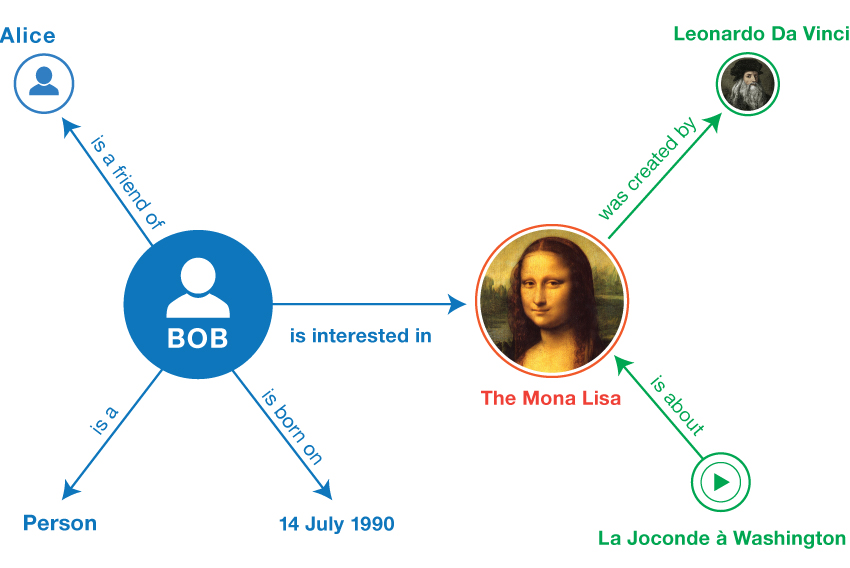
Camille is a second-year engineering student at CY Tech (engineering school part of the Cergy Pontoise university), specializing next year in AI. Her project, titled “Virtual Exhibition of Multimodal Digital Collections,” focuses on designing and implementing a web-based application that allows users to explore curated collections of digitized cultural items, ranging from vase photographs and paintings to texts and videos. The project uses RDF graph representations generated via Tedi, an ontoterminology development environment from the University of Crete. Each collection includes an ontological structure where items populate the graph based on their conceptual relationships and categories. The final deliverables consist of a functional web application with semantic querying capabilities, rich visualizations, and an interactive user experience.
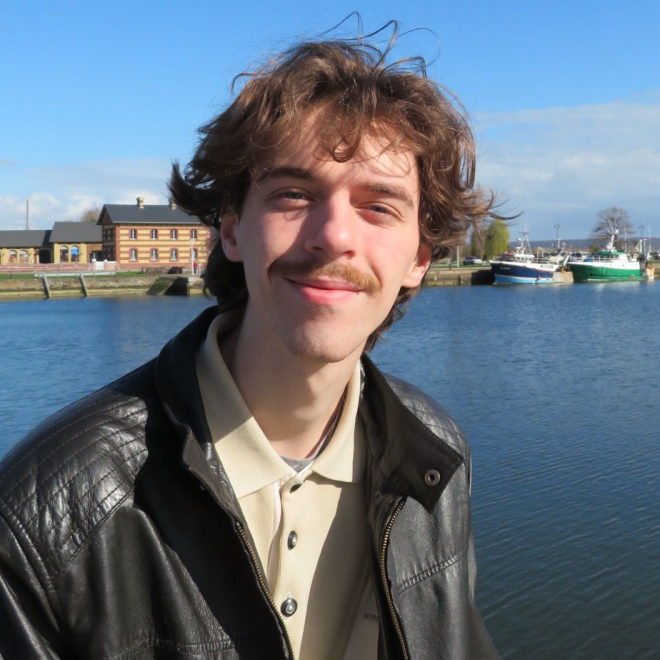
Romain Comapretto
Undergraduate student, Engineering school, CY Tech
BERT and transformers
Read profile
Romain is a 22-year-old engineering student at CY Tech, the engineering school of CY Cergy Paris University, specializing in applied mathematics and data science. His academic background combines strong foundations in mathematics, computer science, and machine learning, with a particular interest in artificial intelligence and its real-world applications. His project focuses on transformer-based models, particularly BERT and related architectures in natural language processing. The project examines the theoretical foundations and practical applications of these models through the study of key research papers. It investigates how transformer models capture contextual information and how they can be adapted or fine-tuned for specific tasks. The project also includes experimental analysis to evaluate model performance and limitations, providing insights into their effectiveness and potential improvements.

Eirini Daskalaki
Undergraduate student, Dept of Primary Education, UoC
Greek L1 curricula
Read profile
Eirini is an undergraduate student at the Department of Primary Education at the UoC. Her project is titled “L1 Curriculum Analysis and Research through Knowledge Graph Construction and Ontoterminology: A Comparative Study of the Three 21st Century School Curricula in Greece.” The three curricula examined are the official L1 curricula for primary and secondary education (lower and upper) published in 2003, 2011 and 2022. Our approach allows for the systematic organization of terms and concepts related to the L1 curriculum, facilitating clearer communication among stakeholders. This includes defining essential terms (e.g., literacy, text, student, skills, etc.), establishing relationships, and setting standards for evaluation and assessment practices.

Sofia Kapeloni
Undergraduate student, Dept of International and European Studies, UniPi
MENA–Europe migration
Read profile
Sofia is senior undergraduate student in International and European Studies at University of Piraeus. The title of the project is “Between Two Worlds: Migration from MENA to Europe”. This research aims to examine migration flows from the Middle East and North Africa (MENA), focusing on identifying countries of origin and destination, exploring the main drivers of migration, and distinguishing between regular and irregular migratory patterns. It relies on a theoretical framework and uses data from the, the United Nations, and the Greek Ministry of Migration and Asylum. Artificial Intelligence tools, specifically KGE and TEDI, will support data visualization and analysis. The research highlights migration as a complex, ongoing, and geopolitically relevant phenomenon in the context of global and regional developments.

Dimitris Malliarakis
Undergraduate student, Dept of History and Archaeology, UoC
Cretan Character · coinage
Read profile
Dimitris is an undergraduate student in the Department of History and Archaeology at the UoC. His project titled “Cretan Character” will attempt an overview of the monetary issues of the most important Cretan cities, starting with Knossos. The duration of this internship will be until May 2025. His task is to collect data on the issuing authority, the metal, the weight standard, etc. based on modern research activity and then, through TEDI, to create a database on Cretan coinage, entitled “Cretan Character”. The supervision of the internship has been jointly undertaken by K.Panagopoulou and the Talos research group.

Stavros Mitsianis
Postgraduate student, Dept of History and Archaeology, UoC
Hellenistic Events revision
Read profile
Stavros is a postgraduate student in the Department of History and Archaeology at the UoC. His internship titled “Review and Correction of the Hellenistic Events Dataset” revolves around the review of the Hellenistic Events Dataset, i.e. he corrects any potential errors and adds missing information that he considers vital. His methodology includes a careful examination of the data already provided while also consulting primary sources, contemporary works, and useful internet websites (e.g. here). Afterward, he will add the new/corrected information on the Tedi software. All in all, his job is to review and finalize the Hellenistic Events Dataset, provide a final report, and create a video for the Talos YouTube channel.
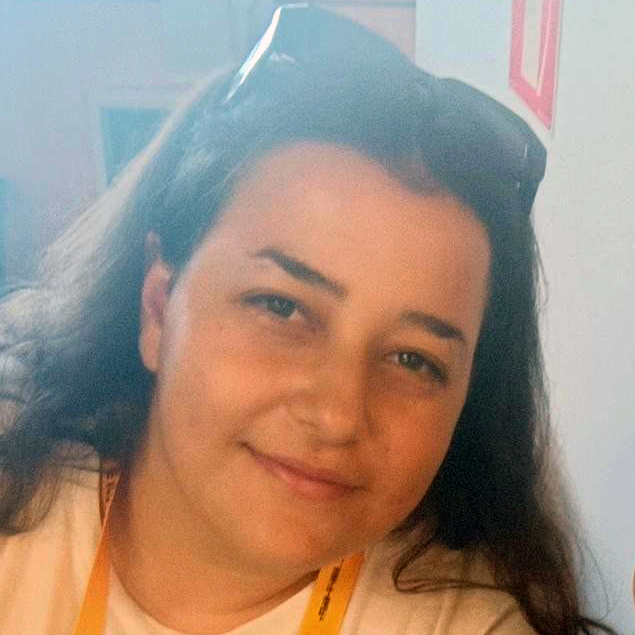
Maria Schoinaki
Undergraduate student, Dept of Computer Science & Informatics, AUEB
Human-in-the-loop semantic annotation
Read profile
Maria is a Computer Science & Informatics undergraduate in the School of Information Sciences and Technology at the Athens University of Economics and Business. Her project, titled “Human-in-the-Loop Semantic Annotation: A Hybrid NLP Platform for Annotating Classical and Educational Texts,” proposes a web-based tool that fuses symbolic terminologies (RDF/OWL) with AI-assisted NER pipelines and LLM-driven suggestion engines, allowing scholars to semantically enrich Greek curricula or classical texts with domain-specific ontologies. The final deliverables comprise a user-friendly annotation interface with explainable AI suggestions and ontology-based validation, a curated, annotated corpus of sample texts, comprehensive documentation and user guides for SSH researchers, and a final report detailing system design, evaluation outcomes, and the integration plan with TALOS.
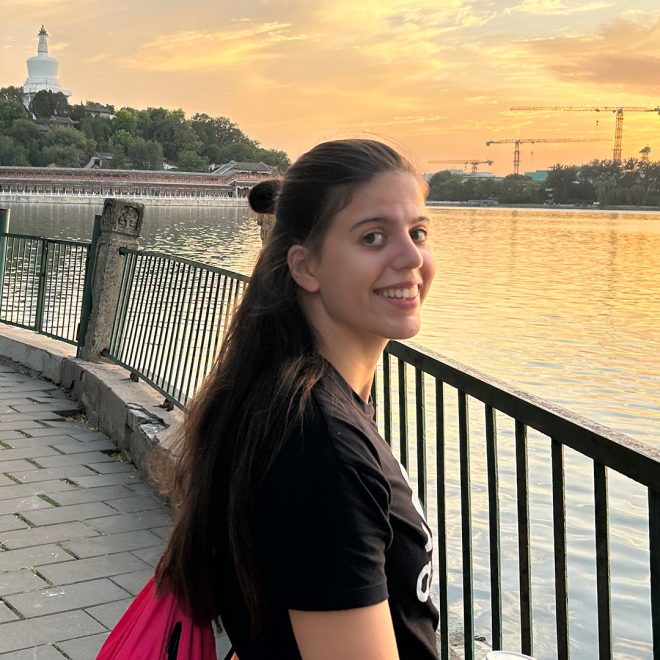
Maria Tzanaki
Undergraduate student, Dept of Primary Education, UoC
Greek L1 curricula
Read profile
Maria is an undergraduate student at the Department of Primary Education at the UoC. Her project is titled “L1 Curriculum Analysis and Research through Knowledge Graph Construction and Ontoterminology: A Comparative Study of the Three 21st Century School Curricula in Greece.” The three curricula examined are the official L1 curricula for primary and secondary education (lower and upper) published in 2003, 2011 and 2022. Our approach allows for the systematic organization of terms and concepts related to the L1 curriculum, facilitating clearer communication among stakeholders. This includes defining essential terms (e.g., literacy, text, student, skills, etc.), establishing relationships, and setting standards for evaluation and assessment practices.

Marina Tzortzakaki
Postgraduate student, Dept of Philology, UoC
Dido · sentiment analysis
Read profile
Marina is a postgraduate student in the Department of Philology at the UoC. Her project titled “Sentiment Analysis of Dido’s monologues in Aeneid IV” analyzes the expression of anger in Dido’s monologues from Virgil’s Aeneid IV, using computational linguistic methods. It involves preprocessing the Latin texts using NLP pipelines, extracting negatively charged words using Python scripts, and mapping those words to already established Latin sentiment lexicons. Statistics regarding punctuation, syntactic features, and stylistic expression will be additionally analyzed. The deliverables include annotated datasets of the texts and a final report of detailed sentiment analysis, interpreting Dido’s emotional evolution throughout her monologues, with visualizations.

Lefteris Zampoulakis
Undergraduate student, Dept of History and Archaeology, UoC
Parliament press archive · OCR
Read profile
Lefteris is an undergraduate student in the Department of History and Archaeology at the University of Crete. His academic interests focus on modern and contemporary history, archival and bibliographic research, as well as ethnomusicology, along with documenting and interpreting Greek traditional and urban folk music. His project, entitled “A Comprehensive Framework for the Digital Processing of the Hellenic Parliament’s Press Archive: Development of Advanced OCR and Systematic Database Implementation”, seeks to bridge the gap between traditional archival research and modern digital methodologies. By developing custom OCR workflows and implementing a structured database environment, the project aims to transform large-scale, static historical press collections into a fully searchable and interoperable digital corpus. This framework will facilitate advanced historical inquiry, enabling researchers to perform precise data retrieval and complex cross-referencing within the digitized archives of the Hellenic Parliament, guided by a spirit of knowledge democratization.
Training, mentorship, collaboration and project visibility are central to the scheme.
Read the full trainee projects